
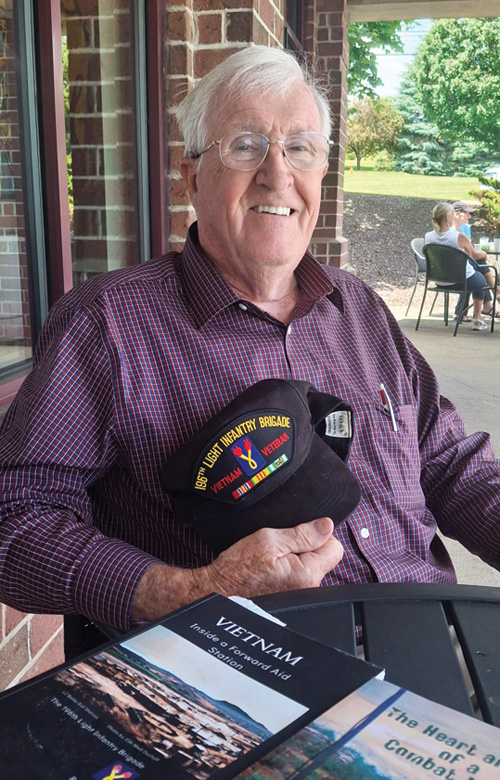
Honoring Bath Veterans: Robert Klein
by Laura Bednar
This year the United States of America celebrates the 250th anniversary of the signing of the Declaration of Independence. As part of the celebration, the Bath Country Journal will run a series of articles throughout the year highlighting early war veterans from Bath Township, starting with the Revolutionary War and progressing through each historical conflict. Through the articles, residents can reflect on military virtues of honor, courage and self-sacrifice that have inspired soldiers as well as civilians since the founding of the republic.
The first images of war that come to mind may be soldiers in combat, but behind the scenes, battalion surgeons like Dr. Robert Klein had the vital role of attending to wounded men in the Vietnam War.
Klein was already a physician in the midst of his surgical training at a hospital in Milwaukee when he received a letter from the U.S. president telling him to report to a military base in Texas for basic training. He was 27 years old and served with the Army from 1967-1969.
“If you graduated from medical school and were breathing, you got pulled in,” he said.
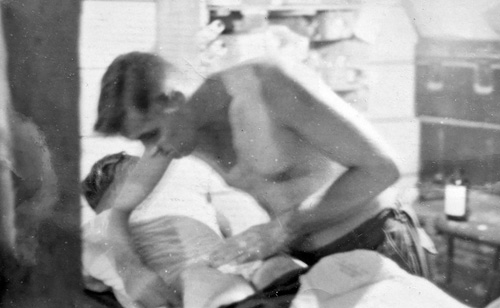
After learning about tropical diseases, snakes and other challenges in Vietnam, Klein shipped out to a base in Chu Lai as a member of the 196th Light Infantry Brigade. The base had no operating rooms and all medical procedures were done in tents.
“Everything that happened in [the TV show] MASH, I saw,” he said.
In a dangerous incident, Klein flew into Vietnam on the night the Tet Offensive started attacks. The helicopter dropped him at a small house at an airfield roughly 7 miles from where the Tet ended up launching a nuclear attack, resulting in a mushroom cloud of explosions. “The blast almost pushed me through the door,” said Klein.
Klein and a team of three or four doctors traveled through North Vietnam to tend to other units’ wounded. In addition to gunshot wounds, Klein saw cases of malaria, dysentery and dengue fever. He himself caught hepatitis while in Vietnam and was in the hospital for four months.
He described the surgery areas as primitive, and men would fill empty ammo boxes with sand and stack them as a makeshift workspace. Klein noted the conditions were hot, dusty and dirty.
The men Klein and his fellow doctors treated and kept at the base were typically back on duty after two or three weeks, instead of being sent to a surgical hospital. “We had almost no wound infections,” he said, attributing it in part to working without shirts, keeping the dirt and sweat stuck to their bodies rather than transferring to a patient.
Some of the hardest memories from the war are young men asking him not to send them back into the field because they didn’t want to die. When there weren’t mass casualties of 30-50 men coming to his base at once, Klein would take a Jeep ride to help at a surgical hospital. During one of his visits, he and three other doctors operated on a man who had been shot in the chest. His heart stopped during surgery, and he was pronounced dead.
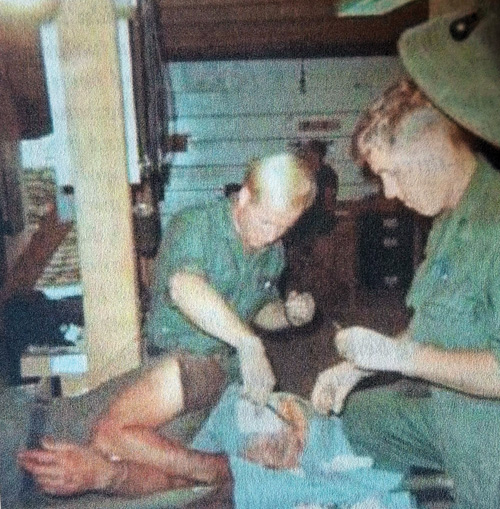
Klein and another doctor stayed behind to practice finding arteries and other anatomy to better prepare for future surgeries. As they practiced, the man’s heart began beating again, and Klein and the other doctor quickly brought back in the anesthesiologist and finished operating. The man had been presumed dead for 10 minutes without oxygen, but Klein said he healed back to normal within a couple of weeks.
Some doctors, including Klein, also took care of injured Vietnamese, including civilians and children. “We took care of everybody,” he said. They tended to the sickest people first. He recalled helping children with fingers blown off after they threw grenades at the U.S. military. “Nobody was totally innocent,” he said, adding that it was a difficult situation with both sides attacking.
One child’s arm had been burned in a fire, and his family left him with Klein for a few months. He put the boy’s arm in a cast and had him carry a bucket of sand to strengthen the arm in the down position.
“The U.S. was generous to people over there,” said Klein, adding that U.S. doctors taught Vietnamese villages about hygiene and how to take care of kids with medical problems.
Klein was also tasked with grave registration, in which he identified the bodies of the deceased soldiers. Some were unidentifiable based on the injuries, and many did not have dog tags.
Through the atrocities of the war, Klein’s outlook was: “This is where God wants me for some reason. You have a chance to help some of these guys who had no choice but to get sent over there. It’s a good thing to be able to help these people. I think most physicians felt that way.”
The Vietnam War was controversial, and when Klein returned home from duty, he changed into civilian clothes at the airport to avoid criticism. Back home, he continued his medical career at the Akron City Hospital for four years, followed by a stint as a pediatric surgeon in Pittsburgh, and settled at Akron Children’s Hospital from 1975 until his retirement.
He said his medical training in Vietnam and the techniques he learned made a difference in his medical career back in the states. He had experience with burns and up to 100 traumas a night in Vietnam, so he kept calm and was used to sewing people up quickly.
Since retiring, Klein spends time with his wife of 62 years, Karen, and enjoys visits from his five children and 11 grandchildren. “I’m enjoying being alive,” he said.
Photo caption: Dr. Robert Klein served with the Army during the Vietnam War from 1967-1969. Photo by Laura Bednar.