
RJRD board hears benefits of beavers; board approves a nonprofit application
by Sue Serdinak
July 28 RJRD meeting
The Richfield Joint Recreation District’s 3 ½-hour meeting started with a presentation about beavers by Meg Hennessey, watershed coordinator for the Cuyahoga Soil and Water Conservation District. Hennessey said the aquatic animals are nature’s engineers and can be beneficial for a park, their dams preventing floods.
She said beavers raise the water table and can help mitigate drought conditions and slow a wildfire, pointing out that more intense storms and climate related threats are showing up in Ohio.
“[Beavers offer] an ecosystem service that we would normally have to pay for,” said Hennessey, explaining that beaver dams improve water quality by removing sediment.
She said that when a problem is created by a beaver dam, flow devices can be added to a stream or pond. Removing beavers from the park is unrealistic because the habitat is ideal for them, and they would return.
Beavers built three dams in the park. Hennessey evaluated the area to see if one of the cabins would be at risk for flooding because of the dam. She found that the dams did not increase the risk.
Recently, all three of the park’s beaver dams were washed out in a heavy rainstorm. They are expected to be rebuilt.
Beavers gnaw on tree bark to sharpen their teeth, often killing the trees. Friends of Richfield Heritage Preserve have built cages around some of the park’s favorite trees. They have also applied a sand/latex mix to some trees.
After the meeting Hennessey told the Richfield Times that she has received about $200 in grant funds through the Northeast Ohio Regional Sewer District to purchase more cages to protect select trees.
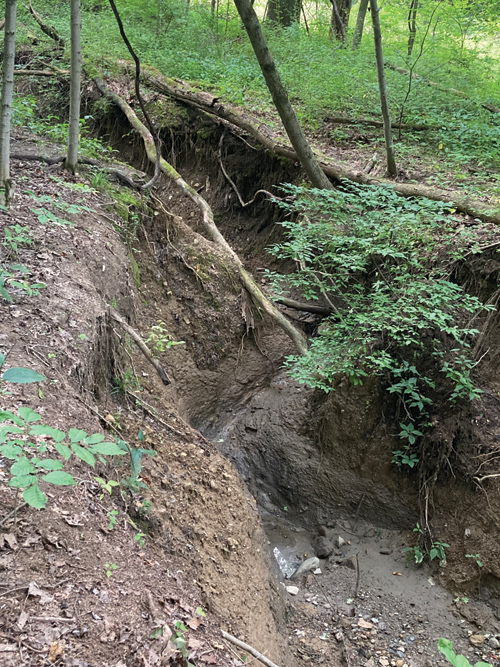
She added that her agency helped evaluate drastic erosion of a ravine near Hi Lea Campground, which resulted in a nearby trail and bridge being closed. She said she has secured funds from NEORSD to help investigate and correct the problem.
Committee reports
Mike Selig, chair of the grant committee, said the committee withdrew its grant application to the Clean Ohio Trails Fund of the Ohio Department of Natural Resources for trail improvements to Amity House and North House that would meet American Disabilities Act standards. He said the application was returned because plans showed the proposed trail would be partially located on an originally platted roadway.
He said the committee agreed to apply for state Capital Grant funds to renovate the boathouse and dock near the Lake Linnea spillway. Earlier estimates to repair the boathouse were about $120,000.
Social media posts
Board Chair Anita Gantner said that social media posts have disseminated incorrect information. She said that 43% of the park’s budget goes to salaries, and for most parks the figure is 54%.
She added that the salary of Park Director John Piepsny is $80,000, and the park pays no other benefits. After the meeting, she confirmed that his contract includes four weeks of paid vacation and sick time. The park district also pays for his contribution to the state’s retirement fund. He is not provided with a car or insurance.
Vendors
Piepsny recommended that the district charge frequent park vendors a fee to be on a preferred list. He suggested the park could also charge wedding parties for borrowing Lodge chairs for ceremonies near the lake.
He reported that Amity House had rental income of about $9,600 since it opened this spring. He told the Richfield Times that cleaning fees were $60 to date.
501(c)(3)
Gantner said in December the board started exploring the creation of a 501(c)(3) to support the park. The board designed articles of incorporation and unanimously approved submitting the application to the state.
Gantner said this would help if the board wanted to run a raffle, acquire an alcohol permit and apply for grants.
After the meeting, she gave the Richfield Times the names of Renee Tuttle, Tracy Schwotzer and Meg Slifcak as the members of the nonprofit.
Insurance
Board member Dave Wehner pointed out that the park’s insurance policy comes from the Ohio Plan. He said that paid park staff should be onsite when volunteers are working in the park. He added that if equipment and tools are used that are not owned by the park, the owner of the equipment would be responsible for injuries, not the park.
Friends’ projects
Corey Ringle, president of Friends of RHP, submitted a written update outlining the group’s ongoing projects. She also included specifications and proposals for additional projects the Friends want to pursue.
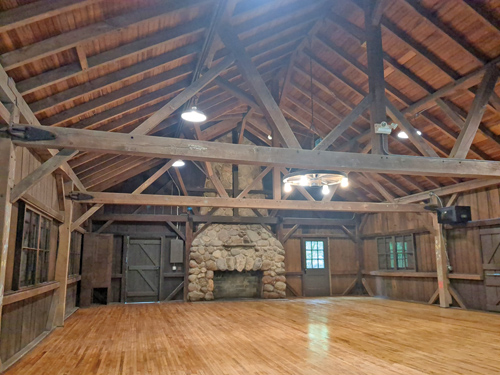
The Friends worked 14 months to restore Garfield Hall. With that work completed, they provided change of occupancy drawings to the park so the director can acquire an occupancy certificate.
The trash and latrine crew continues to clean the latrines and empty the trash. Another sub-group has continued to remove invasive species.
The 2020 park board granted the Friends approval to make improvements to Kirby Mill, including exterior painting and building a suspension bridge. Ringle said contractors have finished work on the water box, supports and flume for the mill and the balcony that hangs over Lake Jinelle.
They will continue to restore windows and doors, replace the wood walkway and paint the building. She said they have discovered critter damage, and volunteers will repair or replace the damaged wood.
In 2020, the board approved the Friends proposal to reconstruct the suspension bridge, which connects the hiking trail south of Kirby Mill to the millhouse. Ringle noted that the group submitted supporting documents to the Governance Committee earlier this year.
Ringle said they received an estimate of $27,600 from Red Point Adventures to “replace-in-kind” the bridge. Mesh would be added for additional safety. She added that the bridge is about 20 feet above the dam and would provide a great view of Lake Jinelle.
Gantner said she understood how people would be drawn to such a bridge, but she had concerns about safety. She asked if other parks had issues with safety and if the Girl Scouts had any accidents. She also questioned how it would impact insurance.
Ringle said they researched Girl Scout safety records to see if there had ever been accidents on the existing bridge. They found nothing in the records.
Selig said the bridge the park purchased to cross the upper lake spillway was more costly, and he questioned the structure of the suspension bridge. “I want to understand the complete aspect of the project,” he said.
Ringle said the engineering firm Gannett Fleming would draw up specifications once the board gives Friends permission to move forward.
“We wanted to get approval this month so we could get the necessary documents to the appropriate authorities for the bridge contract,” Ringle said. “The goal is to get this work done in 2025.”
Board members wanted more time to review the documents approved in 2020. Ringle asked them to email any questions directly to her so she can respond at the next meeting.
Selig asked her to provide the total dollars involved in the Kirby Mill project.
The Ohio Horseman’s Council wants to build a trail crossing structure capable of handling horses, the park’s golf cart and tractor. Ringle asked permission for the Friends to collaborate with OHC to raise funds for the trail bridge, which would replace a now-closed bridge scheduled for demolition.
“I would not be interested in supporting this. … There are a number of other projects that are better suited for your fundraising efforts,” said Selig.
“I’d like to see some way to get across [the waterway],” said Price.
Piepsny warned that a civil engineer would have to design the bridge if it is meant to handle golf carts and horses.
The board took no action on the request.
Ringle also offered the services of the Friends to replace wood siding and the shingled roof of the Hi Lea Shelter. There is water damage to the building, she said, adding that the group would install a metal roof.
She asked permission to start the project before the end of the year. Piepsny said the shelter is frequently rented, but he could block the rental schedule for fall.
Board member Mike Lyons said an MOU would complicate allowing the Friends to proceed. He moved, and the board approved, authorizing the Friends to engage a structural engineer to assess the steps needed to bolster the structure.
Price said it could be classified as a volunteer project under Piepsny and Volunteer Coordinator Susan Czaplicki.
Oviatt House
Trish Steiner, president of Oviatt House Inc., said they signed agreements with KRB Engineering to prepare a wastewater site plan and with Greg Chaplin to prepare architectural drawings required to install a restroom and an ADA ramp and walkway for the restored structure.
She reported that the Summit County Building Department approved a historic designation for the building.
She said the Ohio Operating Engineers will remove the back patio and exterior basement stairwell to facilitate an ADA compliant ramp. The Oviatt House group asked the Cement Masons Local 404 training program to help build the ramp.
Steiner said Kathy Bender of KRB Engineering has helped with the plans, and Summit Excavating presented an estimate of $21,400 to install a grinder pump station and underground piping to connect to the park’s wastewater treatment plant.
The board approved Steiner’s request to use Summit Excavating to construct the wastewater treatment line.
Steiner said they plan to get water to the building by connecting to the park’s water line, using documents provided by Doug Wisneski. He located the water line that starts at the well near the Mable Smith Cabin and goes to Garfield Hall, the Kirby House and to Oviatt house.
The water line work has not begun.
OH has engaged a professional videographer to document the historically significant areas and construction techniques used to restore the 1836 building.
Fence condition
Gantner reported that the park has not undertaken any fence repairs in the last 2 1/2 years. Piepsny noted that approximately $50,000 was spent on fence repair during the initial years after the district acquired the park. The fence has helped deter deer from entering the park.
He added that chain link fencing is relatively inexpensive, and suggested that volunteers could again repair sections damaged by fallen trees.
“If we had created this park, we wouldn’t have put a fence up. … We don’t have enough money for all that we need to do,” said board member Steve McPeake.
Board member Mark Rosen, who lives next to the park, said the trails would have been designed differently if there were no fences. “Leaving it in a dilapidated state doesn’t look good,” he said.
Price and Lyons suggested not abandoning the fence but developing a volunteer effort to keep them repaired.
Comments from the floor
Betty Duncan, a park volunteer, said two-fifths of the park’s trails are inaccessible, in part due to the closure of the bridge near the Kirby Mill. She emphasized that surveys consistently show trail use as the most popular activity among park visitors and urged the board to approve construction of the trail bridge.
Gary LaGuardia said requiring that all work be done during park business hours is unrealistic. John Cross asked if the new 501(c)(3) would be required to make presentations to the board and public.
Photo caption: Friends of Richfield Heritage Preserve planted a combination of new and old bricks in the walkway outside of Garfield Hall to replace the broken up concrete. The volunteers who worked the most hours included Bill Leas, Gary LaGuardia, Corey Ringle, Clive Fetzer, Doug Wisneski, Larry Campbell and Nancy Kanik. Photo submitted.