
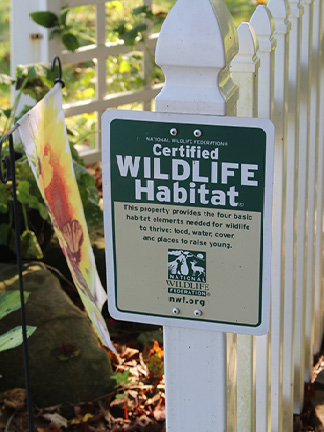
Forget the flower garden, build a backyard wildlife haven
by Melissa Martin
If your fall plans call for transforming your run-of-the-mill yard into a backyard oasis your friends and family will be able to enjoy next summer and for years to come, there’s a good chance a trip or two to the local garden center for a few clearance plants is in your future.
But before you start picking out everything from bushes and shrubs to trees and flowers, experts say it’s becoming increasingly important for homeowners to consider more than just aesthetics when creating a new landscape or modifying existing outdoor spaces.
According to the National Wildlife Federation, native habitats are being adversely impacted by development, pesticide and herbicide use, along with the planting of non-native trees, shrubs and plants at an alarming rate. Ecosystems right here in Northeast Ohio are no exception.
“As a result, many of the birds, bugs and the like are losing their sources for nectar, pollen and host plants for butterflies and moth caterpillars,” Linda Fussi, president of the Hinckley Garden Club, said, noting that birds depend on caterpillars to feed their young. “Without biodiversity, we will continue to lose bird and insect species at the current alarming rate.”
For that reason, under Fussi’s leadership, members of the Hinckley Garden Club have made it their mission to take everyday gardening one step further by creating backyard havens for wildlife and are encouraging others to do the same. Instead of simply planting a garden, homeowners instead need to focus on creating overall wildlife habitats that include natural food sources, water, shelter and places where both animals and insects can raise their young.
The following are three key steps home gardeners can take to make their yards more sustainable for wildlife.
Plant native plants. Fussi said gardeners should aim for planting 70% native plants in their yards to provide natural food sources in all four seasons, including seeds, berries and nectar, as well as shelter tailored to local species.
“Native plants [defined as species that occurred naturally in the region prior to European settlement] are adapted to our climate, and, from firsthand experience, they survive drought better than non-natives,” Fussi said.
Top choices include purple coneflower, black-eyed Susan, butterfly milkweed, cardinal flower, blue false indigo and prairie wild rose. Oak trees, Ohio buckeye, flowering dogwood and pawpaw trees are also recommended.
Add a water feature. Whether it’s winter, summer or somewhere in between, wild animals need reliable sources of fresh water. Providing that resource can be as simple as setting up a birdbath, constructing a rain barrel, or if you have the room, building a small pond.
Fussi also suggests building a water feature from a recycled trough or stock tank.
“Fill with water, natural stones, fish and water plants,” she said. “The fish will cut down on any mosquito larva or you can add a natural mosquito dunk. It’s fun to watch the visitors during the summer. Be diligent on keeping the water source clean.”
Fussi also recommends adding a separate water feature for birds, bees and insects by using a steel trash can lid lined with river rock.
“Fill the lid to the top of the rocks and set in your garden,” she said. “You will be amazed with the visitors.”
Other simple ideas for providing water that can have a large impact include planting drought-tolerant plants and mulching plants whenever possible to help retain the moisture, keep down the weeds and prevent soil erosion. Fussi also suggests constructing a rain garden.
“Rain gardens give excess rain a place to collect and soak into the ground, thereby reducing the amount of water going into the stormwater catch basins,” Fussi said. “Considering the amount of hardscape surfaces, flooding has been an issue, rain gardens help with mitigating this.”
Build a brush pile. The idea, Fussi said, is to embrace more of a natural garden aesthetic instead of a manicured garden. Whenever possible, refrain from cutting areas of the lawn and reduce the use of chemical-laden fertilizers, herbicides and pesticides to eliminate pests and weeds. Additionally, turn fallen leaves, tree limbs, grass clippings and other yard debris into a simple brush pile to provide additional shelter for wild animals. Brush piles alone can provide nesting for more than 50 Ohio species.
As cold weather approaches, let leaves remain where they fall, or rake them under trees and bushes to create habitats for insects. Fussi also recommends leaving dead flowers and plant stalks when possible as seed heads provide food for birds, while insects can overwinter in hollow stalks.