
Twinsburg Township blast puts spotlight on digging regulations, safety
by Judy Stringer
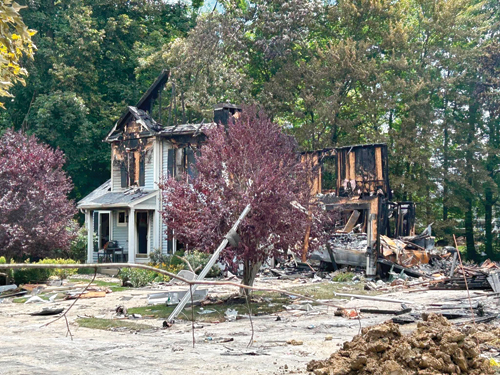
The recent natural gas explosion in Twinsburg Township has served as a stark reminder of the volatile infrastructure lying just inches beneath local lawns. The blast, which occurred after a fiber optic drilling crew struck an underground gas line, destroyed three homes and left dozens of others damaged.
In the immediate aftermath, communities – like Hudson, Twinsburg and Green – halted utility drilling, the state fire marshal and public utilities commission launched investigations and local legislators pledged to back stricter safety parameters for underground boring.
Roger Lipscomb, executive director of OHIO811, which facilitates communication between excavators and utility companies, welcomes the additional scrutiny.
“Public safety is a shared responsibility,” he said. “We all have a responsibility to do our part. When one of us, or two of us, or three of us doesn’t do our part, and we’re not communicating properly, this is where issues and incidents like this happen.”
That shared responsibility doesn’t just apply to utilities, municipalities and contractors, Lipscomb continued. “Homeowners play a critical role, too.”
The 411 on 811
To play that part effectively, property owners must first understand how the system works. In Ohio, anyone planning to dig must contact OHIO811 at least two working days beforehand. Because state law defines excavation as any disruption to the earth’s surface, this protocol applies to smaller projects, such as installing a mailbox or planting a tree, just as strictly as it does to major commercial construction. However, determining who is legally required to make that call ultimately depends on who is doing the digging.
While DIYS are responsible for calling in their own weekend projects, OHIO811 Director of Communications Jamie Gillen warned that some professional contractors try to pass the buck. She said a common trick is telling residents they have to call 811 simply because they own the property.
“The way Ohio law reads, it’s the person responsible for making the excavation, so the person who is putting the shovel in the ground, is who needs to call and notify [OHIO811] before they start that digging,” Gillen warned. She suggested that contractors claiming otherwise are trying to evade legal and financial liability if a utility line strike should occur.
Residents also need to keep in mind that OHIO811 operates strictly as a communication link, not a field operator. The organization coordinates the notice, but individual utilities or their third-party contract locators physically place the flags.
Furthermore, only public utilities will be marked via this process. If lawn sprinklers, electric pet fences or power lines running to detached garages or sheds are at risk, the responsibility to map them falls entirely on the property owner. Lipscomb said reputable private utility locating services can be found on the OHIO811 website.
The danger zone
Once these flags are firmly in the ground, it helps to understand what they mean. The markers follow a uniform color code established by the American Public Works Association:
- White: Proposed or planned excavation pathways.
- Yellow: Natural gas, oil, or petroleum lines.
- Red: Electric power lines or cables.
- Orange: Communication lines, fiber optics or cable TV.
- Blue: Potable water systems.
- Green: Sewers and drain lines.
Along with indicating what lies beneath the surface, these flags establish a legally mandated “tolerance zone,” Lipscomb explained. In Ohio, this safety buffer extends 18 inches on either side of the flagged utility line.
“When they get into that tolerance zone, they need to take safety precautions,” he said. “They need to try and use hand tools where they can, and if they are going to use mechanized equipment, they’re required to have a spotter, independent of the operator, watching the bucket every time it makes a scoop of dirt.”
Property owners can also monitor excavating activity digitally. Through the “Near Ticket” function on the OHIO811 website and mobile app, individuals can use their device’s GPS location to view active excavation notices called in for their immediate vicinity. The digital search pulls up the official ticket numbers, utility details and exact boundaries provided by contractors, allowing anyone to cross-reference the physical flags in their yard or neighborhood with the documented scope of work.
More information on digging requirements, utility markings, and private contractor locating services, as well as the “Near Ticket” monitoring tool, can be found at ohio811.org.
Photo caption: A Twinsburg Township home lies in ruins following a June 26 natural gas blast caused by a fiber optic crew striking an underground line. Photo by Mark Gutowski.