
Reflecting on a century of independence
Broadview Heights to celebrate 100th birthday this year
by Dan Holland
The city of Broadview Heights celebrates a municipal milestone in 2026 as the community severed ties with Brecksville Township and was officially incorporated as a village 100 years ago.
Though the two communities still share many ties, particularly a joint school district, the establishment of Broadview Heights occurred on Dec. 17, 1926, after residents of the western section of Brecksville Township petitioned to become a separate agricultural-centered municipality.
In 1960, after the census revealed that the village had surpassed a population of 5,000, the village became a city in 1961, with voters approving a city charter on Nov. 7, 1961.
Brecksville Township, initially surveyed by Seth Paine on behalf of Col. John Breck in 1811, included the areas that now make up the cities of Broadview Heights and North Royalton. The city’s name reflects the then-already established Broadview Road along with the area boasting the highest elevation in Cuyahoga County of 1,287 feet above sea level, which is marked along Broadview Road near Valley Parkway.
The vote
According to a history compiled by local historian Marie Bender, in November 1926, 80 landowners petitioned the state of Ohio to form the Village of Broadview Heights. The vote, which took place Nov. 30, 1926 at Jake’s Barber Shop, located near the intersection of Broadview and Wallings roads, was cast in favor of secession from Brecksville Township by a 101-7 tally.
The first elected officials installed in office in 1927 included Mayor Floyd Harris, Clerk Carl A. Burtscher, Treasurer Fred C. Clogg and Marshall Lloyd Harris. Village Councilmembers included Charles Behal, A.N. Fuchs, Joseph Fuchs, Frank Masek, Frank Valvode and S.J. Gynn.
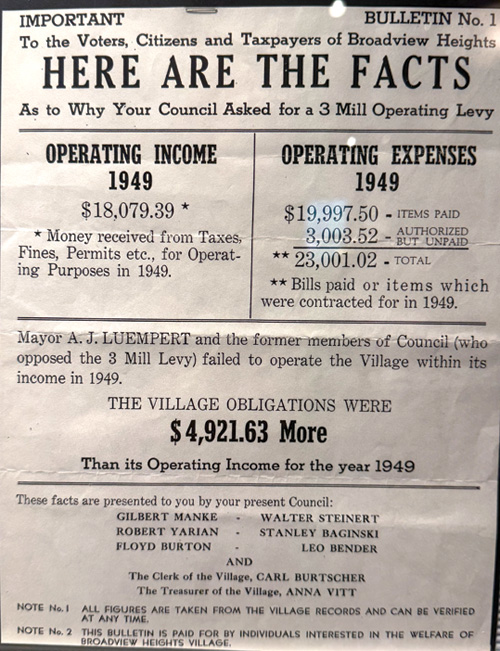
One of the first public building projects consisted of construction of a village hall located at Broadview and Royalwood roads at a cost of $22,800. The new Broadview Heights Village Hall, which was dedicated in July 1929, housed the mayor, his staff and the local police department.
Major acquisition
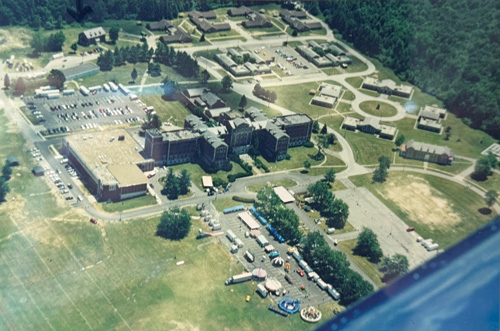
A formative part of the history of the city took place in 1996 when the city of Broadview Heights purchased the former Broadview Developmental Center psychiatric hospital property from the state of Ohio for $750,000. The main building housed the original 1939 U.S. Veterans Administration Hospital, which initially was used as a general medical and surgical facility and later to care for tuberculosis patients. The purchase included 68 acres of land, containing numerous outbuilding to form the new “Broadview Center” city campus.
The adjacent Thorin Building underwent extensive renovations and was initially used to house the recreation and human services departments, with city hall moving into the property in 1999 in the renamed “Community Building.”
A number of outlying buildings or “cottages” – formerly used to house residents of Broadview Developmental Center – were utilized for a number of departments, including the police department, which eventually relocated to its current location in 2000. Additional buildings were renovated for use by the city’s service department, with others housing a number of community organizations. The former VA Hospital building was demolished in 2006.
Preserving history
One of the buildings at the eastern end of campus, formerly used to house the VA hospital nursing staff, now operates as the Broadview Heights Historical Museum, which opened to the public in 2019. The late Joe Behal served as the organization’s first president, followed by Candy Korn, and current president Louise Fiszer.
Behal, who passed away in 2024 at age 96, grew up on a 100-acre dairy farm located along Edgerton Road that spanned between Broadview and State roads. He donated the 60-pound cast-iron bell, which now sits in front of the museum, that was originally perched atop the one-room District 14 schoolhouse, built in the 1800s along Edgerton Road (see Broadview Journal, Sept. 2023 for more information).
After the schoolhouse closed, the Behal family retained the bell and mounted it in their milk house to ring at dinnertime. In addition to dairy cows, the family raised chickens and harvested wheat, corn, hay, straw and maple syrup. A wooden yoke used on the farm for plowing, is also on display in the museum.
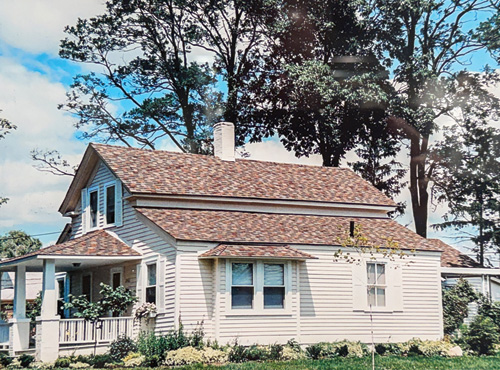
The Broadview Heights Historical Society was founded in 2011, with much of the work to restore the building being performed during the two years prior to its 2019 opening, explained Fiszer. The collection contains more than 2,500 items, with each having a label.
“A lot of the artifacts here are from local residents, including farm instruments from back in the day, and we have various kitchen items,” said Fiszer. “We also maintain a lot of school information. We have school yearbooks going back to the 1940s, and many pictures of historical homes. One wing is all devoted to military, along with police, fire and a presidential section.”
The museum also stores genealogy records.
“People like to know where they came from, and they’re big into genealogy,” said Fiszer. “The new residents who move in seem to be the most interested, as they don’t know much about the city. So, I invite them to come during our open houses and learn about the history.”
For information, visit broadviewheightshistoricalsociety.org.
Behal, who passed away in 2024 at age 96, grew up on a 100-acre dairy farm located along Edgerton Road that spanned between Broadview and State roads. He donated the 60-pound cast-iron bell, which now sits in front of the museum, that was originally perched atop the one-room District 14 schoolhouse, built in the 1800s along Edgerton Road (see Broadview Journal, Sept. 2023 for more information).