
Gardening program continues to grow at Nordonia
by Dan Holland
The indoor gardening program at Nordonia High School, which involves teachers, staff and students, recently concluded its second season of growth. The program was initially funded during the 2024-25 school year after receipt of a $9,050 Educator Initiative Grant from the GAR Foundation.
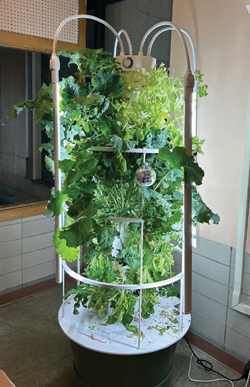
The grant provided funding to purchase seven indoor tower gardens that students use to plant, nurture and harvest vegetables. Nordonia teacher Karen Hovorka, who retired at the end of 2025, was an initial lead for the program, with additional educators, including environmental science teacher and Environmental Club advisor Adam Salberg, leading the program.
“We originally thought about applying for a grant to get a large greenhouse, but we decided that it would be more accessible for students if the growing was in the classroom,” Salberg said. “So, when we found the Tower Garden website, we worked for a few weeks to put together the grant for the GAR Foundation.”
Any student present in a classroom with a garden can help with the gardens on a daily basis.
“Any student in the building can join Environmental Club in my room after school a few times per month,” Salberg said. “Additionally, I will have an advisory period for environmental studies where I plan to teach students how to care for the equipment.”
Leafy vegetables grown so far have included lettuce, kale, spinach, arugula, basil and parsley.
Salberg uses the tower gardens to conduct labs that cover a number of environmental science topics and concepts. During “Salad Days,” students harvest lettuce from the towers and bring in additional items to add to a salad buffet.
“We tried to grow fruiting vegetables such as tomatoes, peppers and cucumbers, but we had less success with these because the flowers need to be pollinated, which provides some challenges with being indoors,” Salberg said. “We tried to pollinate with paint brushes and wind, but we still didn’t get the desired results.”
Intervention specialist Christopher Armao has also been using the tower gardens in his classroom with great success.
“The students have really enjoyed growing plants such as Rainbow lettuce, Iceberg lettuce, Jalapeño and bell peppers and wildflowers,” Armao said. “Seeing the joy on their faces when they go around the school and ask if the teachers would like what they have produced is fulfilling and inspirational to them.
“Not only does the program provide great hands-on science lessons to the students in my room, but it also provides great life skills such as collaboration, social skills and responsibility that they will need when they leave my classroom.”
Tentative plans to hold a farmers market in special education classes with assistance from Environmental Club members did not pan out this year, but may be implemented next school year.
“The main benefit of the tower gardens is that it teaches the kids the responsibility of caring for the plants, while also helping them to understand the environmental benefits, cutting cost on groceries, as well as having fun experimenting with the different crops,” Salberg said.
“We fully intend to continue the program in the future,” he added, noting that they would replant at the beginning of this school year.
Photo caption: Pictured is a Tower Garden, where students grow lettuce and other greens indoors. Photo submitted.